
So this is going to be some just off-the-top-of-my-head ramblings about the new character sheet vs. the old, with some digressions into general game design stuff. So happens that these old game materials I'm running across are things that came to light during the gradual clean-up that occurred during the Great Power-Down and was never finished. The end result was that the piles of stuff scattered around my house were more organized by common themes than before.
So along with the notes on the campaign world I ran across yesterday was Smeaton's original character sheet. I'm not going to include it here, because there's a lot of stuff. But if you compare it to the minimal Fate system character I posted last time, it's incredibly complex. Eight basic attributes, three derived attributes plus a damage modifier for Strength, 29 skills, and some gear. Oh, and his middle name was Hamish. I'd forgotten that.
So on the one hand, it looks as if the Fate character sheet could not possibly yield a character as complex as Smeaton was in the original game, with his 10 skills and 5 aspects. And to a certain extent, that's true, a I'll discuss in a moment. But when you look at what actually goes into playing a character, the Fate sheet has all the high points covered. It's a matter of emphasis. The old sheet, following the old-school game paradigm, lists a lot of skill percentages, but not much about Smeaton as a person. The focus of the character sheet is on mechanical resolution, with the role-playing side left entirely up to the player. This is a valid approach; I said at the time, and I still think that the Atlantis campaign was the best game I've ever played in.
But the skill resolution system was often very frustrating, with the entire party trying and failing to climb a twenty-foot rope in one session, and another character spending an entire combat locked in a futile struggle with a single minor enemy while everyone else was mowing through people to get the battle won. True, Fate Core's skills aren't as granular. If I take Fight in Fate Core, I am equally capable with fists and swords and knives and clubs, whereas in the Atlantis game, I had to take separate skills for all those. This does give a different flavor to combat, especially with the very different skill advancement system, but I don't think it's a game killer.
The emphasis in Fate is on role-playing, so that the mechanics of the game center on it. Therefore, aspects instead of attributes. Much of the game runs on Fate Points. You invoke aspects and spend Fate Points to get advantages, such as my trying to solve a mystery by invoking my "Ex-artilleryman" aspect to contact my old military buddies for information. On the other hand, I can also receive Fate Points by accepting a disadvantage based on my aspects, like being distracted in a fight by a cool piece of tech, which gets my "Hell of an Engineer" curiosity going.
But here's the thing that prompted me to write a follow-up. While there's no role-playing emphasis on the old sheet, one of the pivotal role-plating elements of Smeaton's character developed from the skill system, or more correctly, the skill buying system.
See, when making up our characters, we bought our skills using two pools of points. One pool was for Core Skills, the kinds of things all adventurers end up needing to do, and the kinds of things that aren't necessarily taught in a classroom. Fighting, listening, climbing, sneaking: these are all core skills, and there are never enough points to go around.
The other pool is Knowledge Skills, the kinds of things you CAN learn in a classroom (and which are far less useful in game terms). And in the four games I've played under this system, I've always ended up having more Knowledge Skill points than I can really spend, given the GM-imposed limits on how good a skill can be at the start. I end up buying a lot of skills that I never really use.
So in Smeaton's case, I ended up having some spare points and bought skill in the clarinet, for the hell of it. But this throwaway skill got me thinking of a justification, which is what led to Smeaton's love of poetry and eventually, his Secret Romantic aspect.
So although those points were wasted in terms of game effectiveness, they ended up being something like an aspect in Fate or a disadvantage in Champions: a means to ask questions about my character and deepen his personality.
Showing posts with label Dougal Smeaton. Show all posts
Showing posts with label Dougal Smeaton. Show all posts
Thursday, September 26, 2013

Playing with Fate
 Found some more notes and sample character write-ups for my dieselpunk/pulp adventure campaign world. Still waffling on what system I want to use, but in the meantime, I decided to try adapting an old character to the Fate system to see how it would work.
So here is Dougal Smeaton, my ex-military engineer from our Atlantean campaign. I followed the basic model from Fate Core, and not the model from Spirit of the Century (the pulp adventure game that first got me thinking about Fate) which loads up a lot more aspects and skills.
Dougal Smeaton
Aspects:
A hell of an engineer:
- Benefits: Knows how to design, build and repair machinery
- Hindrances: Thinks of things mechanically, has trouble believing in it if he can't understand how it works
Truth in the bottom of a glass
- Benefits: High tolerance for alcohol, knows a lot about whiskey and brewing, has unique insights
- Hindrances: Often drunk, bad reputation
Ex-artilleryman
- Benefits: knowledge of military customs and skills, experienced campaigner, military contacts
- Hindrances: bad memories of the war, sense of duty may lead him to put himself in danger
Secret Romantic
- Benefits: knowledge of poetry, loyalty, passion
- Hindrances: may do foolish or dangerous things for the woman he loves, trouble when secrets come to light
Two-Fisted
- Benefits: Strong, courageous, loves to fight
- Hindrances: may resort to violence when other approaches might be smarter
Skills:
Physique (Great +4)
Fight, Crafts (Good +3)
Shoot, Athletics, Contacts (Fair +2)
Notice, Provoke, Rapport, Language:
Atlantean (Average +1)
Stunts:
Grappler: +2 on Physique rolls when
grappling
Better Than New: when succeed with
style on repair, add a free situation aspect
Physical Stress: _ _ _ _
Mental Stress: _ _
This would be the sheet for Dougal as he was starting out. It carries all the bullet points of his personality in the aspects (the "Secret Romantic" aspect was one that didn't really exist when I first made up the character--it developed during play--but there is a mechanism in the rules to allow aspects to evolve to reflect the character as he develops). The high Physique skill reflects his large size and strength, and gives him extra physical stress boxes. "Crafts" would be the equivalent skill to "Engineering." In our game, Engineering might actually have been split out into a separate skill. If there were a lot of differentiation of skills, however (say, Fight being split into Boxing, Grappling, Sword, Knife, Spear, etc), then there might need to be a bigger skill pyramid to start, with 15 skills instead of 10.
By the end of the campaign, Dougal would have increased several skills, plus added a few. He would also have several Extras to represent things like his flaming sword Angfar and his companion, the beautiful Princess Leda.
On a normal character sheet, you wouldn't list out benefits and hindrances for aspects the way I did above, but I think it's helpful in this context to show some of the ways they could be interpreted during the game. Aspects not only reflect personality, but are also ways to give the character advantages or disadvantages throughout the game. One interesting mechanic is that you can use aspects to give you bonuses to rolls, after you've made the roll.
So, for instance, when Smeaton learned of Leda's vision that he would die protecting her from a demon, he still foolishly went up against it solo (compelling his Secret Romantic aspect and gaining a Fate point). But during the fight itself, he could have invoked both his Two-Fisted (loves to fight) and Secret Romantic (protecting the woman he loves) aspects to give him bonuses to his Fight rolls. He could have invoked those aspects to mitigate the effects of bad rolls or to reroll completely. On the other hand, because the opponent was so superior, he could have chosen to invoke those aspects only after really good rolls, enabling him to stack a lot of damage at once and defeat a superior opponent. It would be a gamble, but then, the whole fight was.
Sunday, August 14, 2011
The Other Smeaton
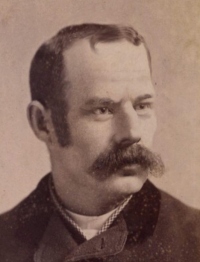
So I thought I was done with the Dougal Smeaton posts, but turns out, I've got at least one left in me. I am excited about our new campaign and about my new character in it, but I notice that I still break into the Scottish accent every now and then for no damn good reason except I miss the big brute, I guess.
But here's the thing: I've mentioned this before, briefly, but he wasn't the only character I had in mind when we were setting up the campaign. I actually proposed two characters, and Dougal was the one who seemed to fit best with the rest of the group as it was taking shape. And since naamah mentioned publishing some of her initial notes as she was putting together Tom Gentry, I might as well do the same thing with the Smeaton who might have been. So here is my intial email to sargon proposing two character ideas.
Like I mentioned Monday, I had a character idea leap into my head while we were talking. Then as I was driving to see my daughter last night, it occurred to me that the group may have too many of one type or other character, so I came up with another. And no matter which one you pick, the other may be useful. So let me present the Smeaton boys.
Dougal Smeaton is the older of the two Smeaton brothers. The Smeaton family runs the Glenellon distillery near Aviemore along the Spey river. Dougal grew up around the boilers and condensers used to make the family product and experimented with steam machines when he grew older, an enthusiastic amateur like so many who helped drive science and invention in those days. His skills with machine tools and engine design are not fully developed yet, though he is an expert when it comes to boilers and pressure systems.
But when was old enough, he joined the Royal Highland Regiment (The Black Watch) or whatever Scottish unit you might have that would get him to Atlantis. He's a big man, strong, stalwart and intrepid. A trained soldier who also knows a little about steam machines and is eager to learn more.
His younger brother Torin Smeaton is a different character altogether. He also grew up around the family business, but was more interested in the product of the distillery than the equipment used to make it. He was fascinated at the thought that barley could be transformed into something entirely different. As soon as he was old enough, he began to travel to other distilleries in other countries, learning more about the art of distilling spirits. In Italy, he discovered that different herbs could be used to infuse multiple flavors into a product, such as Strega:
http://www.strega.it/store/product_info.php?cPath=1&products_id=1&language=en
He also had a brief affair with mysterious Italian woman (at least he thought she was Italian--they met in Italy), who introduced him to more exotic herbs, herbs which acted on the mind and psyche. In attempting to learn more about these substances--telling himself it was only to develop a new product for his family's company--he traveled to Atlantis in search of herbs unknown in Europe. In Atlantis, his studies on herbs brought him into contact with students of the Dark Arts, and almost without consciously deciding to do so, he found himself learning magic instead. When he looks back on it later, he'll wonder if perhaps his winding path was actually directed from outside, by Fate or by some other Power.So there you have the forgotten Smeaton, as well as a first look at what would eventually evolve into the Smeaton we now know. Sargon expressed a preference for Dougal and suggested that he might be an officer for greater latitude of action. But I saw Dougal as more of an NCO. Which led to a bit more exploration of his possible background.
Thinking about this further, the Coldstream Guard/1st Atlantean Rifles obviously is the way to go. If there's any kind of technology exchange with Atlantis or something, he might have joined for that reason, which would have caused some hard feelings with his father, who would have preferred he join a Highlands unit..
As far as his age, I'm thinking he's probably mid-20's, like 25 (Torin is younger, closer to 21 or 22). And as far as freedom of action, what if he had been cashiered from the service, dishonorably discharged for some offense he didn't commit. It wasn't bad enough to get him thrown in jail, but it was bad enough for them to dismiss him (or maybe it _was_ bad enough to throw him in jail, if the case against him had been stronger). So he's military-trained, but not actually serving. Too broke to go home (and his Dad might not welcome him back with open arms anyway, after leaving Scotland to join some crazy Atlantean unit, then getting thrown out for dishonorable conduct).
As far as his military job, I don't know enough about the tech level of the Rifles to speculate. Maybe artillery or a mortarman, or a driver of some sort if they have war machines. Crewing one of those would have improved his engineering knowledge, also, I would think.
Best ideas I can come up with without more detailed knowledge of game world.
There was a little more back and forth, but it was mainly about what kind of engineering he might be good at. Finally, by the first game day, we had a more-or-less finished character: Dougal Smeaton, ex-artilleryman, engineer at the Phoenix Steamworks, engaged in building a steam-powered submersible for Sir Walter Graves and then pressed into service to help find him. It took a few weeks to really find his rhythm, and then it was a really fun ride. I can't imagine how the group would have looked with Torin in there instead.
Monday, August 08, 2011
It Wasn't All Perfect
One might get the impression from past posts about the Atlantis campaign that it was some sort of perfect experience. Of course, it wasn't. So just what sorts of problems were there? I mention these not to be a buzzkill on our fond memories, but just as a reminder of things to watch out for. If I ever do get my nerve up to try to run a game, I will want to keep these things in mind myself.
One continual worry of mine at the prospect of running my own game is the fear that I won't be able to provide enough interesting things for the players to do. That was not so much a problem in Atlantis. In fact, we sometimes had the opposite problem: too many things going on simultaneously.
For instance, when the group returned from the Ghul city, we had several sub-plots going at once. We had come back with a ton of treasure which we had to deal with (and never actually did--the game ended with a ton of golden artifacts still locked up in a room of the late Lord Waugh's estate, assuming no one had just come in and looted it). Victoria had come up with a plan to marry Lord Acrisian, so much of her time was involved in planning that. In addition, someone had sent assassins to kill Victoria, so there was a lot of running aroud trying to figure out who had done it, which dovetailed with the wedding plans.
At the same time, Smeaton was seeing the princess in the tower while trying not to get sidetracked from what was supposedly our main quest to finish the submarine and go hunting for Sir Graves. Gentry's messing with this mirror he got, and Amice is trying to figure out what to do about the hydra goddess we had bargained with.
And the whole time, the gamemaster is trying to throw out these hints about deaths down by the shipyards, but no one is taking the bait, because we all had a dozen other things to worry about, and frankly, with that group, you needed a little more to motivate them than "I smell a mystery. Come on, gang." And eventually, I decided to go ahead and pay attention to the ever-more-obvious signals that the waterfront thing needed looking into, and it led to a good series of encounters. But there may have been a few too many balls in the air at that point for us to focus on the one he wanted us to focus on.
Which leads to the ever-present question of railroading. This is a tricky subject, because on the one hand, as players, you don't want to be led by the nose. But on the other hand, especially in the early game, you don't know enough about the world and your characters to act confidently. You need to be led a little and shown what the possibilities and parameters are. And if the gamemaster has gone to the trouble of preparing an adventure, it kinds of sucks for everybody if you deliberately avoid it. Now he's just wasted a ton of effort, and probably not happy about it, while you're sort of wandering around at random wondering why nothing really interesting is happening. Um, it's because you decided to avoid the interesting thing, genius.
But having said that, it became a little obvious at times that there were tracks that we just weren't going to be allowed to go outside, which got a little frustrating sometimes. And there were a lot of situations that were just so complicated, where we really didn't know enough about all the pieces of the problem, where we would just be lost. Like planning the defenses of Avalon and Atlantis. To really set up the defense correctly would have required maps and detailed order of battle information, and a series of encounters sending out scouts and probes to get intelligence back, which would have stretched things out interminably and probably bored the hell out of the other members of the group. And what the GM would almost inevitably fall back on was an NPC channeling Sean Connery and saying, "Perhaps I can be of assistance." The NPC would detail the plan, and we would just sort of say, "Yeah, let's do that. Tell me when to roll dice."
Which ironically is why it's a good thing all these RPG fantasy worlds look mostly the same. The more unfamiliar the world is, the harder it gets to figure out your options. A good thing to remember for my own game if/when I ever run it.
And then there was the Dawn Forge. Great concept. Wonderful, impressive movie moment as we go in and see this incredible device with the glowing plasma discharges and all. But then we try to use it, and are required to roll dice.
And here's the thing: there was no reason to roll dice, except to make it feel gamey. There were no consequences to failure. There was no way we were going to spend a year-and-a-half getting to this thing, only to die because of a random bad roll. And the gamemaster wanted us to have kewl gear as much as we did. So failing a roll didn't mean you couldn't have the gear. It only meant you had to roll longer to get it. Which made it all kind of pointless. If there's no prospect of failure, why bother rolling at all?
On an almost totally unrelated note, I found out that while my daughter was off visiting my mom this past week, she printed out the rules to a role-playing game. It's a very simple one, looks like, that uses chips instead of dice. Instead of rolling dice for skill or combat resolution, each task has a difficulty, and as long as you have a skill level high enough, you succeed (you also have a pool of chips to buff up certain skills-- not having read the rules thoroughly, I think the challenge level remains secret from the players, so you can fail if you fail to bid enough chips to perform the action or something).
On the one hand, I think it's really cool that she's interested in my kind of gaming, and part of me would like to play the game with her and share that experience. However, it's based on the Warriors books, and I just don't know how much patience I would have playing a game about a tribe of feral cats. Urgh. Difficult question.
One continual worry of mine at the prospect of running my own game is the fear that I won't be able to provide enough interesting things for the players to do. That was not so much a problem in Atlantis. In fact, we sometimes had the opposite problem: too many things going on simultaneously.
For instance, when the group returned from the Ghul city, we had several sub-plots going at once. We had come back with a ton of treasure which we had to deal with (and never actually did--the game ended with a ton of golden artifacts still locked up in a room of the late Lord Waugh's estate, assuming no one had just come in and looted it). Victoria had come up with a plan to marry Lord Acrisian, so much of her time was involved in planning that. In addition, someone had sent assassins to kill Victoria, so there was a lot of running aroud trying to figure out who had done it, which dovetailed with the wedding plans.
At the same time, Smeaton was seeing the princess in the tower while trying not to get sidetracked from what was supposedly our main quest to finish the submarine and go hunting for Sir Graves. Gentry's messing with this mirror he got, and Amice is trying to figure out what to do about the hydra goddess we had bargained with.
And the whole time, the gamemaster is trying to throw out these hints about deaths down by the shipyards, but no one is taking the bait, because we all had a dozen other things to worry about, and frankly, with that group, you needed a little more to motivate them than "I smell a mystery. Come on, gang." And eventually, I decided to go ahead and pay attention to the ever-more-obvious signals that the waterfront thing needed looking into, and it led to a good series of encounters. But there may have been a few too many balls in the air at that point for us to focus on the one he wanted us to focus on.
Which leads to the ever-present question of railroading. This is a tricky subject, because on the one hand, as players, you don't want to be led by the nose. But on the other hand, especially in the early game, you don't know enough about the world and your characters to act confidently. You need to be led a little and shown what the possibilities and parameters are. And if the gamemaster has gone to the trouble of preparing an adventure, it kinds of sucks for everybody if you deliberately avoid it. Now he's just wasted a ton of effort, and probably not happy about it, while you're sort of wandering around at random wondering why nothing really interesting is happening. Um, it's because you decided to avoid the interesting thing, genius.
But having said that, it became a little obvious at times that there were tracks that we just weren't going to be allowed to go outside, which got a little frustrating sometimes. And there were a lot of situations that were just so complicated, where we really didn't know enough about all the pieces of the problem, where we would just be lost. Like planning the defenses of Avalon and Atlantis. To really set up the defense correctly would have required maps and detailed order of battle information, and a series of encounters sending out scouts and probes to get intelligence back, which would have stretched things out interminably and probably bored the hell out of the other members of the group. And what the GM would almost inevitably fall back on was an NPC channeling Sean Connery and saying, "Perhaps I can be of assistance." The NPC would detail the plan, and we would just sort of say, "Yeah, let's do that. Tell me when to roll dice."
Which ironically is why it's a good thing all these RPG fantasy worlds look mostly the same. The more unfamiliar the world is, the harder it gets to figure out your options. A good thing to remember for my own game if/when I ever run it.
And then there was the Dawn Forge. Great concept. Wonderful, impressive movie moment as we go in and see this incredible device with the glowing plasma discharges and all. But then we try to use it, and are required to roll dice.
And here's the thing: there was no reason to roll dice, except to make it feel gamey. There were no consequences to failure. There was no way we were going to spend a year-and-a-half getting to this thing, only to die because of a random bad roll. And the gamemaster wanted us to have kewl gear as much as we did. So failing a roll didn't mean you couldn't have the gear. It only meant you had to roll longer to get it. Which made it all kind of pointless. If there's no prospect of failure, why bother rolling at all?
On an almost totally unrelated note, I found out that while my daughter was off visiting my mom this past week, she printed out the rules to a role-playing game. It's a very simple one, looks like, that uses chips instead of dice. Instead of rolling dice for skill or combat resolution, each task has a difficulty, and as long as you have a skill level high enough, you succeed (you also have a pool of chips to buff up certain skills-- not having read the rules thoroughly, I think the challenge level remains secret from the players, so you can fail if you fail to bid enough chips to perform the action or something).
On the one hand, I think it's really cool that she's interested in my kind of gaming, and part of me would like to play the game with her and share that experience. However, it's based on the Warriors books, and I just don't know how much patience I would have playing a game about a tribe of feral cats. Urgh. Difficult question.
Sunday, August 07, 2011
A Farewell to (Hairy) Arms
So this is it, the last Smeaton post (probably). This will be long, but I want to get it out, so bear with me.
The Atlantis campaign is officially over. We played the last real session on Thursday night and had a brief epilogue/wrap party last night. Scotch was sipped, secrets revealed (more plotting to kill Smeaton by the other party members than I was totally comfortable with, actually--don't blame them, but still...), and songs were sung. There ended up being a total of thirteen song parodies inspired by the game, which is just... Oh god, I'm almost a filker. It's seriously embarrassing. It may have been one of the dorkiest evenings I have ever spent in my life, which is saying something, but it was also one of the most fun.


As well as a few side porn stories for the ladies, the copious notes written up by the GM for campaign background including a world's worth of locations and a huge cast of NPC's. And then there were my own piles of research for Smeaton, including research on making Scotch, info on early submarine designs, research on period poetry, and even a full manual of light artillery from 1896 I found on Google books. Oh yeah, and the recipes. Seriously. (ETA: And how could I forget that bat-cheva recorded something like the last 10 months of game sessions? Or the CD of soundtrack music and naamah's description of the game's proposed movie trailer that inspired me to construct an audio track of my own version of the trailer?)
 And the thing is, it wasn't clear from the start that things would turn out so well. Our previous superhero game had been wildly fun, a laugh-a-minute gonzo ride through space and alternate dimensions. But for the new game, we were not only taking a more serious approach, but also adding two new players, efamar and jormungandr. Jorm had played years ago, but not recently, while efamar had not really gamed at all. Bat-cheva had only one campaign under her belt, and sargon and naamah had been gaming solely with each other for years, and so had developed a very personal gaming style that might not translate to a bigger group.
Because this game was something special to all of us, I think. Besides the 13 song parodies, the game also inspired faux tintype portraits, physical props, various other illustrations including portaits of efamar as her character:

Smeaton's original, but too small and plain, sub design:

And Smeaton's letter to Gentry after the night of the demon battle:

As well as a few side porn stories for the ladies, the copious notes written up by the GM for campaign background including a world's worth of locations and a huge cast of NPC's. And then there were my own piles of research for Smeaton, including research on making Scotch, info on early submarine designs, research on period poetry, and even a full manual of light artillery from 1896 I found on Google books. Oh yeah, and the recipes. Seriously. (ETA: And how could I forget that bat-cheva recorded something like the last 10 months of game sessions? Or the CD of soundtrack music and naamah's description of the game's proposed movie trailer that inspired me to construct an audio track of my own version of the trailer?)
 And the thing is, it wasn't clear from the start that things would turn out so well. Our previous superhero game had been wildly fun, a laugh-a-minute gonzo ride through space and alternate dimensions. But for the new game, we were not only taking a more serious approach, but also adding two new players, efamar and jormungandr. Jorm had played years ago, but not recently, while efamar had not really gamed at all. Bat-cheva had only one campaign under her belt, and sargon and naamah had been gaming solely with each other for years, and so had developed a very personal gaming style that might not translate to a bigger group.
The early sessions were erratic, trying to find our place in the world and our dynamics as a group. Efamar was very shy and unsure, jorm's character had trouble finding his niche, and bat-cheva felt unequal to the leadership role she found cast upon her. As for me, it took me a while to find Smeaton's voice, but between the first moment I obeyed the impulse to have Smeaton deny the reality of magic and the time I gave the speech about Smeaton's goal in life--selling Smeaton's Own Steam Man whisky from town to town back in Scotland--I think he fell into place.
 And about the time jorm dumped Dr. Travis for Strego, the entire group began to click and things got seriously fun. And now we're looking at the next game with some anticipation--because though we loved Atlantis, I think we were all ready to move on--but also with some trepidation, because what if we can never recapture that lightning-in-a-bottle thrill we got during the best parts of the Atlantis game?
Sargon is unsure of the campaign setting he wants to run. I had been planning to propose taking my own turn GMing after Atlantis ended, but I'm barely keeping up with my blogging commitments now. I don't think I could sustain a decent campaign as things stand right now, though I am keeping the notes I've prepared in case circumstances change and I want to try at a later date.
One of the coolest things about the game for me is that the game ended, in dramatic terms, with a kiss between Smeaton and Amice, his secret crush for most of the game. Games are played in basically two modes: dramatic mode, when players speak as their characters in scenes of discussion or action, and narrative mode, when time gets compressed and information in discussed at a higher impersonal level. And as far as I can remember, the last actual scene was between Smeaton and Amice. In a movie, it might look something like this:
Amice plunges the enchanted dagger into Smeaton's chest. He jerks and gasps as magical life flows into him. His eyes fly open to see Amice sitting in his lap--covered in blood, still flushed and panting from the battle, her concerned face only inches from his own, her eyes gazing into his.
Impulsively, he leans forward and kisses her, heedless of the blood. After a moment, she kisses him back. FREEZE FRAME. FADE to sepia as Waylon Jennings narrates.
NARRATOR
And that's the story of how Mister Smeaton freed the hydra goddess and then killed her ass, with a little help from his friends. Smeaton and Amice never really discussed the kiss afterwards. They had both already made other choices with their lives.
DISSOLVE to sepia toned shot of the palace.
NARRATOR
Smeaton eventually married the Empress Leda, while High King Valor returned to Avalon to wed his queen. Lady Victoria and King Acrisian, not to be outdone, had two weddings, and in the years to come, there were children, kittens and puppies for everyone.
DISSOLVE to shot of the mountains in sunset.
NARRATOR
Strego, Son of Thunder, led his followers back to their home in the mountains, where they learned the art of breeding dragons from the Dorks of the North, who were much impressed by Strego's boots.
DISSOLVE to shot of Atlantis as the sun sets over the distant ocean.
NARRATOR
And Amice Belden, the true hero of the Battle of Bel-eth? She assumed the throne formerly held by the late Lady Celaeno. History doesn't record whether rumor ever reached her ears of Empress Consort Smeaton's favorite concubine, a petitebrunetteredhead who was always seen dressed as a British librarian, and if anyone ever drew a connection between the concubine and the fearsome Witch Queen, they were probably smart enough not to speak such suspicions out loud.
And so everybody lived more or less happily ever after, until Smeaton's son, whom he always called Alfred after his favorite poet, assumed the throne and declared himself Caesar, which never works out for anyone. But that's... another story...
CUE THEME MUSIC. ROLL CREDITS. FADE OUT:
So that's out of my system now, and I move on to a new character (though if anyone wants to write their own alternate ending, go for it).
I'll be back.
Wednesday, July 20, 2011
Smeaton Sings

Yes, the Atlantis game is still chugging along, though drawing to a climax soon. And so, I thought it was a good time to reveal a particular aspect of Smeaton's character that has gone unrevealed to the others for over a year. And because the Atlantis game is unlike any other RPG I've ever played, I ended up revealing the secret in a song.
Lemme 'splain. No, is too much. Lemme sum up: efamar and jormungandr have been treating us to song parodies about our characters for a while now. I've got a stack of them in the back of my game binder, parodies of "A Whole New World" and "Total Eclipse of the Heart" and others. I didn't participate because, though I have written songs before and enjoy the discipline that comes with lyric writing, well, I have to get pretty inspired to do it. The last song I wrote IIRC was composed while driving in a military convoy around northern South Korea.
But then jorm sent around a link to a video of a guy named Matt Mulholland doing a mournful minor-key cover of Rebecca Black's "Friday." And I thought it was cool, so I watched some of his other videos, and ran across an acapella multitrack of Ceelo Green's "Fuck You."
Which sparked something in me, because Smeaton has long had a secret crush on someone else in the group, and a not-so-secret grudge against her boyfriend. And when I actually sang the song for everyone over the weekend (and BTW, having not sung in front of people in years, I had to rehearse a lot--try to imagine what it felt like walking around work for two or three days constantly singing "Fuck You" under your breath), I don't know how many pieces actually fell into place for the people listening, but a few big ones obviously did.
But for the benefit of completeness, here is the timeline of the Smeaton crush (pause while everybody else who knows nothing about the game scrolls down to the next post or else leaves entirely).
THE MEETING: Smeaton wasn't actually impressed by Amice Belden when he met her. She was pretty enough, but bookish and full of fancies about so-called "magic."
THE CHIMERA: His attitude toward her changed over time, especially when they went upcountry to battle a chimera. She showed amazing spirit and bravery, yet still remained feminine and somehow fragile. A contradiction.
THE SOLDIERS: Smeaton kept his feelings buried most of the time, but when the group tried to flee the country to avoid arrest by British soldiers due to their association with the spy, Dr. Travis, he let his feelings show just the slightest bit. When the soldiers leveled their rifles, he cried "Amice" (not "Miss Belden"--one of maybe three times in the entire game he has done that, and nobody ever notices) and tackled her to the ground, covering her body with his. She was very annoyed at his sexism.
The trip to and from the city of the Ghuls did not allow much time for him to dwell on his feelings, what with the seasickness and the Hesperian woman and the giant hydra and all. Amice became more involved with her magical studies and Smeaton wondered if it was simply not meant to be.
CUPID'S ARROW: During a strategy session at Lord Acrisian's house, Smeaton was struck through the heart with an assassin's arrow. Everyone else went their separate ways in the subsequent battle, but Miss Belden ventured down to the lawn where Smeaton lay on the verge of death to bring him back. This was also where the group met rather slippery Jareth Rosewood, spy and scout.
THE WET T-SHIRT: While fighting a sea serpent, Smeaton was swallowed whole and carried off. The others pursued the creature to a submerged cave to rescue him. Amice cast off her heavy dress and swam down in only her shift. Though he tried to bluff his way through, Smeaton was not immune to the beauty on full display.
THE PRINCESS AND THE DEMON: Smeaton's feelings became very confused when he met a beautiful princess imprisoned in a tower. She claimed that she had seen visions of him all her life, and long ago fallen in love with him. They began an affair which seemed doomed, for her visions also showed him being killed protecting her from a fearsome demon. The battle, when it came, though, saw Smeaton emerge victorious against near-impossible odds.
But it was clear that the victory was only temporary. Whoever had sent the demon would merely send another, perhaps stronger, to finish the job. Smeaton needed help to sort this out. And who should show up at precisely the moment he needed help with precisely the help he needed but Amice Belden? As if she knew instinctively, as if they were somehow connected.
THE PIRATES: Once Smeaton's submarine was finally finished, the group set off to find the lost tomb that would give them clues to the location of the next phase of their quest. Along the way, they were beset by pirates. While Smeaton tried to seal the barrel of the deck gun so the sub could dive safely, he was struck by arrows and fell, senseless, into the water below. With no thought for her own safety, Amice cast herself over the gunwale to save him from drowning. Smeaton began to think she might care for him as much as he was coming to care for her. He was even considering finding a way to split amicably from Leda when they reached the Triton city, where things changed.
THE BUGGER AND THE BABY: Once the group reached the Triton city, however, everything went wrong. Leda and Smeaton ended up in some drunken orgy that he only barely remembers, while at the same time, Rosewood and Amice became lovers. Not long after, Leda informed Smeaton that she carried his baby. Smeaton's opportunity had passed.
THE PACT: Smeaton decided his first responsibility was to the child, and so decided that his loyalties must lie with Leda. However, his distrust of the Viceroy and the current Emperor led him to a dark decision: to insure his child's safety (as much as it could be insured), he must overthrow the throne of Atlantis and see Leda made Empress instead. And the first person he approached with the plan was Amice. He still didn't dare reveal his feelings, but now they shared a secret. It was something.
THE POSSESSION: Unfortunately, Amice was soon taken over by the spirit of an evil ancestor, a powerful ancient sorcerer named Daath. She turned against her friends and caused them to be routed in a crucial battle. And here we depart the actual history for a small meta-digression. I would sometimes prepare speeches for Smeaton to deliver in case a certain situation arose. They were often memorable: the Steam Man Whiskey speech, the "We're in Hell" speech, the Dougal Bloody Smeaton speech. I had actually prepared a "Come back to me, My Amice, My Love" speech for Dougal if he ever had occasion to come face-to-face with Dark Amice. Alas, he was off kicking the asses of an entire army of barbarians and giants while the others got to facilitate Amice's return from Heel to Face. Oh, and Rosewood earned Smeaton's enmity by stealing Smeaton's favorite dagger. Bastard.
THE MIND-READING: Nothing further developed between the two during the trip to the Dawn Forge in the furthest reaches of the north, but there was one dangerous moment (not counting the danger of the giant evil-sorcerer-possessed automaton). While debating the fate of the Forge, Lady Victoria used her newly developed powers of telepathy to read Smeaton's mind. If she had tried to read deeply and learn his secrets, the truth might have come out, but she specifically stated that she was only trying to read surface thoughts regarding Smeaton's intentions concerning the Forge. And so his secret feelings remained secret. And his resentment of Rosewood grew.
THE ASSASSINATION AND THE DEATH OF CELAENO: Lately Smeaton's trust in Amice was shaken when she offered to "fake" Leda's assassination as the factions have begun their battle for the Dragon Throne. Smeaton had no guarantee that the assassination would not be real, and it certainly looked real. But in the end, he chose to trust his heart in trusting Amice, and during the subsequent battle with the sorceress Celaeno, Amice healed him back from the brink of death (resulting in another rare use of her given name when Smeaton thanked her).
Truth be told, Smeaton may never reveal his feelings for Amice, almost certainly not while Leda's alive, especially since it seems evident by now that she does not reciprocate them in the least. Which is fine. I mean, there's a reason why you never hear "romantic" as one of the adjectives bandied about concerning Scottish men, and Smeaton is a stiff upper lip-type. He's good at expressing anger, but other emotions, not so much.
Sunday, December 19, 2010
Awesome Is Measured In...

(ETA: In case you don't know what this is referring to, you can read about it on Wikipedia here. I just thought it was kind of silly. The original artist is the same guy who inflicted this on us, though, so don't this is some kind of blanket endorsement of his work, though if he hadn't done that, we wouldn't have had this)
Wednesday, December 01, 2010
Smeatons and McClanes
Had to move our game night around this week due to my crazy Target holiday schedule. So we gamed Monday night and it was a doozy. We were involved in a huge battle that was a combination of Helm's Deep and Pelennor Fields which ended up a bit like Task Force Smith. Smeaton rode out with a chariot sortie into the thick of battle, while the rest of our group stayed on the walls.
And suddenly our resident witch, who has lately been growing all kinds of awesome from the higher level spells she's been learning, performed a face-heel turn which made Smeaton's look about as convincing as Dave Foley's conversion to "pure...... evil" on Newsradio.
Our leader was taken captive, the rest of our group was knocked out of commission, but Smeaton fought on, killing a couple of giants to rescue a fallen king and commandeering a war mammoth to help his comrades escape.
Because although Smeaton may suck at being pure.... evil, he is still teh awesome. In fact, as I got stuck in a "Die Hard" quoting loop last night, let me state right here and now that awesome is a measurable quantity, and the unit of measure for awesome in America is the McClane.
But in Europe, where they operate on the metric system, awesome is measured in Smeatons. And there are roughly 2.1 McClanes to a Smeaton (cause Smeaton's a really big guy).
That is all.
Our leader was taken captive, the rest of our group was knocked out of commission, but Smeaton fought on, killing a couple of giants to rescue a fallen king and commandeering a war mammoth to help his comrades escape.
Because although Smeaton may suck at being pure.... evil, he is still teh awesome. In fact, as I got stuck in a "Die Hard" quoting loop last night, let me state right here and now that awesome is a measurable quantity, and the unit of measure for awesome in America is the McClane.
But in Europe, where they operate on the metric system, awesome is measured in Smeatons. And there are roughly 2.1 McClanes to a Smeaton (cause Smeaton's a really big guy).
That is all.
Wednesday, November 10, 2010
Big Game Wednesday - Dougal: From Face to Heel

 So I haven't updated about our current game in a while, and thought I'd throw out a little update (which is kind of silly, since most of the people who read the blog are people who are already playing in the game--oh well...).
Dougal has gone through several transitions in the game, and has emerged as a rather contradictory character. He started out as an engineer with a healthy skepticism for claims of "magic"--a giant Scully with man-boobs. That opinion has obviously had to go through a few revisions over time, since like Jack Burton, he's experienced some very unreasonable things. Some of it he has explained to himself in terms of Christian faith (a seer with visions of the future being analogous to a Biblical prophet, or of course, the whole "we're in Hell" episode which still gets some mileage) and others in terms of scientific principles that have been lost (alchemy and monsters, for instance).
Interestingly, though, the Hell that is Atlantis has morphed from a place of punishment to a Purgatory designed to tempt and corrupt him so completely that he might finally be consigned to the flames of an even worse Hell. He has been tempted by money (vast riches carted out of an ancient city), violence (he's done a lot of killing), pagan worship (an ancient evil goddess with whom he had to bargain to escape said ancient city alive), lust (the Princess with whom he has fallen in love has some very... flexible morals when it comes to sexuality), and power (his prowess with a mighty flaming sword having helped him defeat demons and sorcerers, drawing him into intrigues surrounding the throne of Atlantis and the vice-regal government of the British colony).
Though he has fallen short in most areas, he had always remained a loyal British citizen. Until he learned that the Princess Leda (one of the contenders for the Atlantean throne whose death was faked following the attack of a demon foretold in visions) was carrying his child. Dougal is smart enough to know that his child would be perceived as a threat by both the boy-emperor and the viceroy, so he has decided to ally himself with the supremely dangerous Amice Belden, descendant of the most reviled sorcerer in the history of Atlantis, the man responsible for the cataclysm which sank the island originally.
So Dougal has now transformed almost completely into someone that he would have reviled had he met him at the start of the game: a brutal killer allied with witches and a traitor to the Empire. It remains to be seen what effect this will have on his behavior in the future.
I'm of two minds about the whole thing, myself. On the one hand, the roleplaying is a lot of fun, and as I've said, light-years beyond most of the gaming I've done. On the other hand, this is not a game in which any kind of long-term planning is rewarded, because circumstances can change completely from one week to the next. I feel as if I'm somehow not contributing if I'm not trying to help shape the story, assert some kind of positive control over my actions rather than simply reacting from week to week. But then, so much happens that simply must be reacted to.
Wednesday, July 28, 2010

Thursday, July 22, 2010
Another Smeaton Update
Yeah, I know, I'm writing about Smeaton perhaps more than I should. After all, the only people really interested in Smeaton are the ones around the table. But I need time to digest and synthesize or something, so here I am, recapping.So last time, I talked about Smeaton getting involved with a princess, but not trusting her motivations, and also feeling that things might somehow be fated due to a poem he read that seemed to echo his situation. In the meantime, he was involved in a big subterranean battle that involved his being swallowed by a giant sea serpent and subsequently cutting his way back out, like a cross between Jonah and Conan. Jonan.
When he returned home from that mess, he found a note from the princess, obviously a request for him to come visit. After the exhaustion of the night, there was nothing she could say that would get him out the door. But he read the note anyway.
And then promptly left and visited her in the tower (she can play him like a Stradivarius, apparently).
She had quoted from the poem, you see. Matthew Arnold's "Dover Beach," the poem that Smeaton superstitiously believed was an omen for their relationship. A poem she would have had no reason to read--she being Atlantean and it being a British poem--and which he had never told her about.
She told him that she had been having visions of him since her young teens, that she had heard him recite that poem in one of her visions, and that in another he saved her life sometime in the future.
And she was convincing enough that Dougal has begun to believe that maybe her affection is true, and that maybe this is not some cruel trick of hell or fate to simply bring him more misery. And meanwhile, there's still a sub to be built, which he spent the next day doing. And for once, between the progress on the sub and the very important clues they discovered during the previous day's battle, it seems as if they're finally making progress toward their goal after far too many digressions and distractions.
But unbeknownst to Dougal, the princess has summoned his friends to her tower to tell them that Dougal doesn't merely save her life in her visions. He dies in the attempt. So she begged his friends to keep him away from the tower for the next few nights, for her end is surely approaching quickly and she wants him to be spared.
Talk about a no-win situation. We're talking epic tragedy there. There are so many interesting directions it can go. What will the friends do? Will they tell Dougal, or will he find out some other way?
Part of me hopes that they don't tell me, because I don't want to lose Dougal. Part of me wants to fight the good fight, trusting to the dice and a clever plan to beat my doom, knowing that Dougal is indispensable as the only guy in the group who can get the sub built. I figure that's the only reason he's been snatched from the jaws of death every time so far.
But then part of me realizes that Dougal is no longer indispensable. An NPC has taken over the building of the sub and can finish it without Dougal's help. And frankly, it might be Dougal's time. As I just mentioned, Dougal has cheated death a couple of times only through the use of DM fudging and emergency get-out-of-death free points. That can't go on forever.
But without Dougal, what would I do? Before we started the campaign, I gave Sargon two character concepts, and we agreed Dougal would be the better choice. The other concept could certainly work, although it would require some serious twisting to get me into play quickly. And the problem is, this character would not fill the same niche that Dougal does, which might not work as well for the group. Or I could come up with another character entirely.
And like I say, I might be completely jumping the gun. Just because some princess in a tower says I'm fated to die doesn't mean it'll happen. After all, if she's so smart, how'd she end up in the tower in the first place? Ha!
See? Everything's going to be fine. Totally.
...god, I can't believe I have to wait a week.
Friday, July 16, 2010
The Final Smeaton and Another Old Photo
So I did a little tweaking to the Smeaton portrait, and here's the final result.


I had reduced the size of the eyes previously, because the original photo was a little doe-eyed, but I decided I reduced them a little too drastically. He was too beady-eyed, like a lizard or John Wesley Hardin. So I have brought the eyes back up, just a little, and added some very subtle wrinkles around the nose and forehead. I don't want to do too much of that, because Smeaton isn't even 30 yet, so I don't want him too wrinkled. Just a little weathering and character was needed.
Basically, I'm worried that if I continue to dink around with it, I'll start to make it worse instead of better, so I'm leaving it alone.
As I was going through my virus problems last week, I searched through my discs looking for a boot recovery disc a former co-worker had given me. And in the process, I found a disc with a bunch of old family photos I had gotten from a family reunion several years ago.
It was weird looking through the photos now, because I've been on a retro nostalgia kick for a while now. Here's a photo of my dad and his family.

Ross the family partriarch is in the center rear. He always seems to have his head cocked with this half-smile on his face, like he can't believe anyone is taking this picture stuff seriously. The two women are his wife Eunice (my grandmother, who died before I was born) and my Aunt Thelma. The rest are Ross's five sons and one daughter.
Dad is the one on the left with the glasses and the crutch. He was struck by polio as a kid and has walked on one crutch almost all of his life. And I don't know what it is in a lot of these pictures, his slender face or his dark hair with the rakish combover or the way he's usually doing the Clooney (head down, eyes up), but I seem to see Loki in those pictures, something dark and sly underneath the surface (or maybe it's just the nose; Kirby always drew Loki with a very distinctive nose).

It's weird to see these pictures, because the faces are familiar but the people are strangers. I hadn't met any of them yet, and in a sense, perhaps I still haven't, because the people I grew up seeing on holidays are not the people in these pictures. They were the people these folks became, and there's a difference. My dad is a cool guy, but I wonder what it would be like to meet him then, when he was younger than me. Would he seem like the same guy? Would I like him?
Thursday, July 15, 2010
Making Smeaton
One of our other gamers, the inimitable naamah-darling, posted an awesome mock tintype she made up of Tom Gentry, her character from our Atlantis game.


So finally I found a pic that looked like it would be a good starting point, an old tintype of a guy from about the right period with a bushy mustache.

And after she made her character, she made up some of a couple of other characters, which wasn't hard because the female characters are apparently based on two vintage lovelies, Maude Fealy...

And Gabrielle Ray.

(Those aren't the pics she actually used, BTW)
So then, of course, the challenge was up to me to make up a portrait of Smeaton for my own tintype. Which is harder than it sounds, because I can't point to any one person and say, "That's Smeaton." I can find pictures that come pretty close in one aspect or another, like the Hibernian FC player from 1889 whose face I used for my first Smeaton photo. But the source pic was in horrible shape and the face was tiny and lacking any detail, not good for a portrait.
So then, of course, the challenge was up to me to make up a portrait of Smeaton for my own tintype. Which is harder than it sounds, because I can't point to any one person and say, "That's Smeaton." I can find pictures that come pretty close in one aspect or another, like the Hibernian FC player from 1889 whose face I used for my first Smeaton photo. But the source pic was in horrible shape and the face was tiny and lacking any detail, not good for a portrait.
The historical Sundance Kid comes pretty close as well...

though a little too good looking.
Tangent time: a guy in my very first screenplay class at USC almost 30 years ago wrote a short script about a graphic artist being asked to draw a hot dog for an advertisement "like that orange you did before."
"You want a hot dog that looks like an orange?"
"No, but that orange had the quality I'm looking for. So draw another hot dog, but make it more like the orange."
Which sounds ridiculous, but in searching for a model for Smeaton, I can totally relate. Because when I think of the qualities I want Smeaton's face to have, the guy who comes to mind is the big, bald German who fights Indiana Jones in the Flying Wing sequence of "Raiders of the Lost Ark" (played by the late Pat Roach).
Roach is not Smeaton, but that character has the weathered, rough-around-the-edges, old campaigner vibe I'm looking for. So take the Sundance Kid and make him look like Roach-as-bald-Nazi, and you're in the ballpark. But like the kid said in "Live Free or Die Hard,"
"I mean, more like a plan, like, a way to do that."
So finally I found a pic that looked like it would be a good starting point, an old tintype of a guy from about the right period with a bushy mustache.

And after a lot of GIMPing around, I came up with this.

Now, I don't know if I'm actually done or not, but this pic comes close. Bushy mustache, long sideburns, a dour-verging-on-angry expression, high forehead to indicate intelligence (though I think I may have gone a little too Frankensteinian here), just a little gaunt with a nose that looks like it has seen some hard times. The hair is not as unkempt as I picture it, but it wouldn't be in a formal portrait.
I won't bore you with the process unless someone asks for some step by step pics. And if any of the Atlantis crew have any comments on whether this look like the Smeaton you know, please let me know.

Now, I don't know if I'm actually done or not, but this pic comes close. Bushy mustache, long sideburns, a dour-verging-on-angry expression, high forehead to indicate intelligence (though I think I may have gone a little too Frankensteinian here), just a little gaunt with a nose that looks like it has seen some hard times. The hair is not as unkempt as I picture it, but it wouldn't be in a formal portrait.
I won't bore you with the process unless someone asks for some step by step pics. And if any of the Atlantis crew have any comments on whether this look like the Smeaton you know, please let me know.
Wednesday, July 07, 2010
Big Game Wednesday - Revenge of the Ninja
To pick up from where I last left off, we got some fresh Gamemastering blood as the last remnants of our high-level Dungeons and Dragons group graduated and left. Other than myself and a couple of one-off DM's, the main two Gamemasters were Gary and Brian.
Gary was Air Force ROTC guy about whose games I'll start discussing next week. Brian was a half-Asian dude who ran Fantasy Games Unlimited's Bushido.
At the time, I was really starting to get into Japanese culture. The ninja craze of the 80's was just taking off, with movies like 1981's "Enter the Ninja." I was watching as much anime as I could find (which wasn't much in the early 80's). And there was a local station in L.A. that played Spanish language programming during the daytime and Japanese shows at night, so I watched a drama about Miyamoto Musashi, and sumo wrestling, and this weird show with stand-up comedians in traditional garb, kneeling on tatami mats and telling jokes based on topics introduced by a moderator. If one guy told a bad joke, some dude would run in from off-stage and paint a mark on his face with a big calligraphy brush.
So Bushido sounded like a cool game, and of course, I had to be a ninja. Two problems with that:
Number one, the game didn't really make ninja the supermen I hoped they would be.
Number two, the game dealt with Japan's caste system, and ninja were eta, the lowest caste. So my character was hampered by his social standing and not compensated with uber-cool abilities. And not helped at all by the mediocre stats I rolled up.
Meanwhile, my friend Jose decided to be a samurai and rolled up a pretty high-ranking noble with good stats. Gary was also a ninja at about my level.
So the basic storyline for the campaign was, Jose's character was a young noble headed out to make a name for himself, and we were two ninja hired to shadow him and make sure he didn't get himself killed. We went through several adventures together. Brian was a good Gamemaster, especially good at using campaign fluff to make things vivid and interesting.
But as the campaign continued, I got really frustrated. Number one, and this was my own damn fault really, I decided to specialize in hand-to-hand combat, augmenting my strength with shuko claws. I was going to be Ninja Wolverine, baby. But shuko did piss-poor damage next to swords, so I wasn't nearly as effective in combat as everyone else.
Second, Bushido had a suck-ass experience point system, where you were only awarded points for creatures you killed. As in, not creatures you helped to kill, but creatures you awarded the final blow to. So we get in a fight with a demon and some wolves, and Jose's samurai is mowing through things with his katana, and Gary's ninja drops a couple of wolves with shuriken and his sword, and meanwhile I'm spending the entire time trying to claw this one wolf to death. And in the end, Jose finishes off his last guy and comes running over to finish off my wolf. End result: Jose gets the xp for all the things he killed, plus the one pathetic wolf I spent all my time on, and I get nothing.
So Jose, who had already started out ahead of us thanks to lucky die rolls, continued to advance thanks to kill-stealing and a game that encouraged it.
So one week, Jose didn't show up. Gary and I, on our own, decided to murder the Shogun's mother and frame Jose's character for it. It was a brilliant game-session, in which we had to kill some city guards in order to get faked traveling papers, then posed as Buddhist monks to infiltrate the noble lady's compound (she was a devout Buddhist herself and very generous to those who shared her religion), then had to stealthily roam the estate at night and commit the murder, planting forged evidence to frame Jose. It was maybe one of the best single game sessions I have ever played, partly because it was entirely our own idea with no GM scripting at all. Brian improvised it brilliantly.
Jose's character showed up next week and learned he was ordered to kill himself, which he did. And finally, Jose's dice abandoned him. He botched his seppuku rolls horribly, and the guy acting as his second similarly botched his head-chopping roll. Jose's character died a horrible lingering death. He rolled up another character, but really, his samurai had been the center of the group, and without him, the game died.
Brian also ran a Runequest game for awhile. I wasn't a big fan of Runequest when we first started playing. There was a lot of background material that Brian knew, but none of the rest of us were familiar with. And combat was complicated and deadly, more so because you didn't increase in hit points the way you did in D&D.
But as I got used to it, I began to appreciate the different flavor Runequest had. The skill and spells system was unique, and I came to like it much better than D&D's restrictive classes. I don't remember why we quit playing, unless it was just that Brian quit showing up. Probably got a girlfriend or something.
It just so happens that the game we're playing now uses a rule system adapted from Runequest. Or I should say, it uses rules adapted from Chaosium's Basic Role-Playing system, which was adapted from Runequest in 1980. And on that segue, a brief note about Smeaton.
Smeaton is beginning to display a hidden romantic side, thanks to a couple of things I tossed into his character background. When I was buying his skills initially, I had some points left over and couldn't think what I wanted to use them for. So on the spur of the moment, I decided to toss in something random.
Why not give him a musical skill? I mean, at the time, there were certain things that were expected to be a part of any young man's education, and I was sure Smeaton's mother--devoted to the social niceties--would have insisted on it. He would never need it, but what the hell? Engineer, artilleryman, knife expert, clarinet player.
And then, at some point, I was playing him as drunk and decided to have him recite Tennyson's "Charge of the Light Brigade," which became something of a catch-phrase for him. So, killer, clarinet player, poetry reciter.
And when the recent political game occurred, there was a random bit of business involving the code word, "Dover." So I thought of having Smeaton hum the song, "The White Cliffs of Dover," only it was written far too late to be a part of our game. So I looked up poems about Dover, and found one titled "Dover Beach," which includes this stanza:
Ah, love, let us be true
To one another! for the world which seems
To lie before us like a land of dreams,
So various, so beautiful, so new,
Hath really neither joy, nor love, nor light,
Nor certitude, nor peace, nor help for pain;
And we are here as on a darkling plain
Swept with confused alarms of struggle and flight,
Where ignorant armies clash by night.
Which was awesome, because not only had the code-word incident introduced Smeaton to a possible love interest, but it's also in the context of a political struggle which will obviously involve much double-dealing, misery and bloodshed. "Ignorant armies clash by night," indeed.
So, having already introduced Smeaton as a guy who learned the clarinet mainly at the insistence of his mother, I decided that she had also been a poetry buff who had insisted her sons learn to recite at least one poem by heart (it's a bit of a retcon, but a feasible one that advances the story, so I figured the GM wouldn't object). For Dougal, it had been Longfellow's "The Village Blacksmith," which in some ways describes Dougal himself, or at least the way Dougal wants to see himself.
But he had also heard his mother recite something about Dover Beach, and when he looked it up, he found that, indeed, the poem did seem to have some ominous meaning for his life, as if it were a sign from the heavens. So "Dover Beach" has become Smeaton's new catch-poem, and every intrigue and complication and violent incident convinces him still further that they are reaching the point where there will be no joy, no love, no peace, only ignorant armies clashing by night.
And the "love, let us be true to one another" part? He's not sure about that. The woman he met is a princess. Not a ruler (she's in prison for the rest of her life), but still a noble, and he's just a commoner with callused hands. There has been romance, but he still doesn't trust that such a woman would be interested in a man like him, and so he suspects another agenda at work.
God, this is so many light years beyond, "Okay, you're in a 10 foot wide corridor, and a party of kobolds wanders by, what do you do?" that it's not even funny.
But he had also heard his mother recite something about Dover Beach, and when he looked it up, he found that, indeed, the poem did seem to have some ominous meaning for his life, as if it were a sign from the heavens. So "Dover Beach" has become Smeaton's new catch-poem, and every intrigue and complication and violent incident convinces him still further that they are reaching the point where there will be no joy, no love, no peace, only ignorant armies clashing by night.
And the "love, let us be true to one another" part? He's not sure about that. The woman he met is a princess. Not a ruler (she's in prison for the rest of her life), but still a noble, and he's just a commoner with callused hands. There has been romance, but he still doesn't trust that such a woman would be interested in a man like him, and so he suspects another agenda at work.
God, this is so many light years beyond, "Okay, you're in a 10 foot wide corridor, and a party of kobolds wanders by, what do you do?" that it's not even funny.
Friday, June 25, 2010
A Game That Stays With You
Yet another Dougal post.
Although it's not so much a post about Dougal as about the game in general. This game is different from any other game I've ever played. The thing is that, although roleplaying games are often spoken of as "interactive storytelling," the roleplaying aspect is often fairly weak. The mechanics of the game get in the way, the players get bored or silly, or else the game develops into some sort of contest between players and GM.
Out of six players, we have four published authors, so there's a lot of story being developed and a lot of roleplaying and emotional involvement. I've had emotional investment in characters before--I was devastated when Digger died--but I don't know that I've ever been so emotionally involved that the character's experiences were still affecting my attitude two days later.
And I'm not the only one. Another player is having dreams about the game. Another got kidnapped and ended up getting a special short story written by the GM about her experiences while a prisoner. Players are making binders of game info, sourcebooks, character backgrounds, character portraits. The superhero game was fun, but the Atlantis game is getting deep.
Sargon the GM mentioned in a LiveJournal post once that I always have "an agenda that is weird, but entertaining to watch unfold." Part of that is due to my character. Dougal is smart, but he's not clever. He can figure things out, but he needs time to reflect. So I would be driving home from a game, puzzling over clues, replaying scenes in my mind, and I come to a realization of what I think is going on, or figure out how Dougal would react. And I would walk in the next week prepared to spring that on the game at the right moment--a speech about my plans for my future career, or a speech about my speculation on the identity of our enemy, or my epiphany that we are in hell. Played in Dougal's personality, something he has figured out over time, not done as metagamey table talk.
I didn't want to dominate the game, but I wanted the game to have dramatic interpersonal moments. And what was really cool on Wednesday night was that we had another one of those scenes, one player character springing an absolute head-spinning surprise on another. And the best thing was that it wasn't me this time. Everyone is stepping up, and this is truly a level above just about every game I've ever played.
Tuesday, June 01, 2010
Fraze Puts Dougal's Foot In It
Another update on our current game starring the Scottish giant, Dougal Smeaton (no pic this time, sorry). Previous posts here, here and here.
So the game is going along last night, and everyone else is mired in the weeds of politics and the machinations of nobles, but I often break off to go build my sub or something, because Dougal's a hands-on kind of guy and not so much of a strategic thinker. So a fellow soldier asks me for a favor, and next thing I know, I'm caught in a situation where my understanding of what's going on literally changes from second to second. And by the end, I'm deep in it, whether I want to be or not.
And the thing is, I could probably manage to work my way out of it only because I'm sort of poor and powerless. Except that now I'm not. We just got back from an extended adventure with a hell of a lot of money, so now I'm sort of a man of means, and I've got to figure out how to deal with that. I was planning to use that money to become an industrialist, but that means a certain amount of influence and responsibility, and that means dealing with political structures that an underling never has to deal with.
So everything just got a lot more complicated. Damn.
Have I mentioned that this game is one of the best I've ever played in? I'm having a blast.
Tuesday, April 06, 2010
Random Jumble
So this is once again mainly an excuse to post another pic I threw together of Smeaton overseeing the construction of a sub he designed, but there's a lot of other stuff to mention as well. For instance, one show that I'm really loving right now is Archer, an animated spy comedy on FX.

Dougal Smeaton is the big fella directing the Atlantean worker while a woman watches from the background. Is she the bloodthirsty Victoria Sterling-Drake perhaps, or could she be the mysterious sorceress whom Dougal was associated with, the infamous Amyce Belden? Behind the woman, you can see the half-finished submersible craft Mr. Smeaton designed.
But here's the thing: I don't usually like this kind of show. I'm not into really crude sexual humor, or cursing for its own sake. Homo jokes don't automatically make me giggle. I can't stand any of Seth Mcfarlane's shows, I'm not a big fan of Venture Brothers or Aqua Teen Hunger Force, and it took me forever to appreciate the subtleties of South Park.
But Archer has pieces of all those shows. It's probably closest to Venture Brothers in spirit, but Venture Brothers just made me uncomfortable, while Archer makes me laugh out loud. I don't understand why, but I still love the show. I'd post the link to Hulu, but because it's a mature show, you'd have to sign in anyway, so I'll just say, if you have a Hulu account or are up to starting one, you'll be able to find Archer pretty easily.
Second, I'm changing schedules at work again, so I have no idea whether I'll be at Conestoga or not. And I'm discreetly keeping my ears open for another job, which is soon, I know, but I'm not cut out for phone work for the long haul.
Third... I'm actually not ready to talk about Third yet. Maybe soon.
So here's the Smeaton pic.

Dougal Smeaton is the big fella directing the Atlantean worker while a woman watches from the background. Is she the bloodthirsty Victoria Sterling-Drake perhaps, or could she be the mysterious sorceress whom Dougal was associated with, the infamous Amyce Belden? Behind the woman, you can see the half-finished submersible craft Mr. Smeaton designed.
So if anyone's interested in crunchy details about the making of, the pic is pieced together from several pieces. The background was a color photo of a train factory from the 40's, found on this Library of Congress Flickr page. The sub in the background came from this collection of submarine photographs (it's the Grampus, BTW). The woman in the background came from this collection of Victorian era cartes de visite. Smeaton is taken from two other cards in the same collection: his head from one, and his body from another. I had to cut out the arm, reposition it and clone-paint the hand from resting on a table to pointing a finger. The Atlantean is a screen capture of a Babylonian extra from D.W. Griffith's silent epic "Intolerance."
So I pasted everything together, the color background and the sepia-toned Victorian photos and the black-and-white photos of hte sub and the Atlantean. Tweaked the brightness and contrast and got everything sepia-toned and matching pretty well. Spent more time putting in grungy elements to simulate the damage you'd see in an old photo like that and not being very satisfied with the results. And finally, as I'm looking through tutorials to try to find the missing element, I see a reference to a Photoshop filter that will do much of that for me.
So I check GIMP and sure enough, there's a script-fu that will age and damage a photo, make it sepia toned with a ragged, faded border. So I run that, and it's the final element I needed to tie everything together. I think this one turned out much better than my last one.
See you tomorrow for Big Game Wednesday.
Wednesday, March 03, 2010
Big Game Wednesday - Bloody Mad Dougal
I had originally planned to continue my odyssey through my early days of gaming, but I figure it might be a nice change of pace to have an update on the game I'm currently playing, just because I'm having so much fun with it. I've mentioned Mr. Smeaton before, but didn't actually speak much about the game itself.
So, a very brief background: the game takes place in Atlantis during the late 1800's (we think; Atlantis can only be reached through some sort of dimensional portal that may be an entrance to an alternate universe, or perhaps a gateway to the distant past). Britain has established a colony in Atlantis and jealously guards the secret of the Rift. Because in Atlantis, magic and alchemy actually work, producing wonders that can transform modern civilization, and Britain wants to make sure that the resulting power and wealth are hers alone.
Enter Dougal Smeaton, a gigantic Scotsman, son of a whisky maker, former artilleryman, and now an engineer designing steamships powered by Atlantean alchemy. Smeaton has fallen in with a rather bloodthirsty noblewoman named Victoria Sterling-Drake, who is on a mission from the Crown to find a close family friend, Sir Walter Graves. Graves was an archaeologist on the trail of a legendary treasure. He disappeared under mysterious circumstances.
So Smeaton has suddenly found himself being dragged along on a series of adventures with Miss Sterling-Drake, along with her mysterious manservant, a sorceress, and a doctor. They've battled cultists and assassins and sorcerers and monsters on the trail of a mysterious statue which holds the secret of a legendary island under the sea. Along the way, they lost the doctor and gained a native hunter/tracker. And quite recently, Smeaton went rather mad.
Here's why that last bit's important:
At one time, I apparently told the members of my gaming group that all my previous player-characters had seemed to go crazy at some point or another. I don't remember saying that, but they assure me I did. But it isn't really true. Not every character has gone mad, just... several. And you know, there were mitigating circumstances and shit.
And so, my character in our recent futuristic superhero campaign, Cole "Metalord" Chen, got an unjust reputation for being "insane." He wasn't, really. Or not entirely. The Joker has a great line in "The Dark Knight" where he says...
Part of it may have just been frustration with a new game world and a different gaming style; I would try to figure out a plan--gather evidence, establish a headquarters, whatever--but it didn't seem to make much difference to the overall plot. Whatever I tried to do, it would a) not work, and b) be made totally irrelevant by some new plot development. Nothing I did mattered.
At one time, I apparently told the members of my gaming group that all my previous player-characters had seemed to go crazy at some point or another. I don't remember saying that, but they assure me I did. But it isn't really true. Not every character has gone mad, just... several. And you know, there were mitigating circumstances and shit.
There was Matrix, but she was crazy by design and got to die a really heroic death. And there was that chaplain in that Morrow Project game, who just snapped and began preaching to a forest fire. But really, it was a one-shot game, and everybody else in the party had already killed each other or themselves, so in a sense, my character was the sanest one in the game. And, yes, Stim the thief in Chuck's D&D game had gotten really paranoid and went totally round the bend. And then there was that ninja in Bushido who concocted an elaborate scheme to kill the young samurai he was assigned to protect, but that wasn't so much crazy as evil.
And so, my character in our recent futuristic superhero campaign, Cole "Metalord" Chen, got an unjust reputation for being "insane." He wasn't, really. Or not entirely. The Joker has a great line in "The Dark Knight" where he says...
"I'm a dog chasing cars. I wouldn't know what to do with one if I caught it. You know, I just... do things."I'll be talking more on Monday about how you can't take the Joker at his word on things like that, but it's a perfect description of Cole.
Part of it may have just been frustration with a new game world and a different gaming style; I would try to figure out a plan--gather evidence, establish a headquarters, whatever--but it didn't seem to make much difference to the overall plot. Whatever I tried to do, it would a) not work, and b) be made totally irrelevant by some new plot development. Nothing I did mattered.
So at some point, I just started... doing things, random things, which had consequences, and that was Step One. And then, when I got mind-controlled by the evil Red Queen, I had to play Cole as evil for a while, and had entirely too much fun doing it, and that was Step Two and game over. The verdict was in: Cole is random and unstable and enjoys the dark side way too much, ergo crazy.
So okay, I accept that, and yeah, I even played into it quite a bit once the rep was established. And I had fun doing it (my favorite "crazy Chen" moment came when I pretended to lose my powers for a while, prompting another member of our group to try to get them for himself, which didn't turn out quite the way he wanted). But now the campaign's over and we're starting the Atlantis story, and I was determined not to do the same things with Smeaton that I did with Cole. Smeaton was going to be stalwart and heroic, a dependable rock, an island of calm unmoved by the storms whirling around him.
And for a while, it worked. Turns out, the doctor took the role of the crazy one there for a while, and Smeaton could be the dependable rock I wanted him to be. Yeah, he did have a really bizarre ambition to sell whisky which he would brew in the belly of a giant steam automaton, and he did deny the existence of magic even when it was performed right in front of him. But bad business plans don't equal insanity, necessarily, and as an engineer, it makes sense that he would only believe in what's measurable, repeatable, buildable with your own two hands (plus there was another reason that he still hasn't discussed with anyone--I wrote a speech, but I've never had a good opportunity to give it).
But once Lady Sterling-Drake entered his life, Smeaton had a run of bad luck. He has been stabbed and shot. He had his throat slit by an assassin, and on another occasion had his guts slashed open by the same fellow. And more recently, he was nearly burned to death by a fire-breathing chimera. And in every instance, he was healed, completely and instantly, by Lady Sterling-Drake's extraordinary empathic powers.
So what is a rational-minded engineer--who believes firmly in mundane explanations for seemingly miraculous events--to conclude when confronted with fire-breathing monsters of legend and multiple instances of being brought back from the brink of what seemed like certain death, with not even a scar to show for it?
The only thing he can conclude, really. Mr. Smeaton has decided that he is in Hell, and that Lady Sterling-Drake is the demon assigned to torment him. He is obviously doomed to an eternity of being pushed by her into situations where he will be grievously wounded unto death, only to have her put him back together good as new so that he can do it all over again, forever.
Or to put it another way, Mr. Smeaton has gone quite barking mad. Which is a shame, really, because I don't want this reputation to become some sort of self-fulfilling prophecy. I can play a character who stays sane. I can. I'm almost totally certain of it.
Pretty much.
Next week: Villains and Vigilantes, 1st Edition, and the worst GM ever.
So okay, I accept that, and yeah, I even played into it quite a bit once the rep was established. And I had fun doing it (my favorite "crazy Chen" moment came when I pretended to lose my powers for a while, prompting another member of our group to try to get them for himself, which didn't turn out quite the way he wanted). But now the campaign's over and we're starting the Atlantis story, and I was determined not to do the same things with Smeaton that I did with Cole. Smeaton was going to be stalwart and heroic, a dependable rock, an island of calm unmoved by the storms whirling around him.
And for a while, it worked. Turns out, the doctor took the role of the crazy one there for a while, and Smeaton could be the dependable rock I wanted him to be. Yeah, he did have a really bizarre ambition to sell whisky which he would brew in the belly of a giant steam automaton, and he did deny the existence of magic even when it was performed right in front of him. But bad business plans don't equal insanity, necessarily, and as an engineer, it makes sense that he would only believe in what's measurable, repeatable, buildable with your own two hands (plus there was another reason that he still hasn't discussed with anyone--I wrote a speech, but I've never had a good opportunity to give it).
But once Lady Sterling-Drake entered his life, Smeaton had a run of bad luck. He has been stabbed and shot. He had his throat slit by an assassin, and on another occasion had his guts slashed open by the same fellow. And more recently, he was nearly burned to death by a fire-breathing chimera. And in every instance, he was healed, completely and instantly, by Lady Sterling-Drake's extraordinary empathic powers.
So what is a rational-minded engineer--who believes firmly in mundane explanations for seemingly miraculous events--to conclude when confronted with fire-breathing monsters of legend and multiple instances of being brought back from the brink of what seemed like certain death, with not even a scar to show for it?
The only thing he can conclude, really. Mr. Smeaton has decided that he is in Hell, and that Lady Sterling-Drake is the demon assigned to torment him. He is obviously doomed to an eternity of being pushed by her into situations where he will be grievously wounded unto death, only to have her put him back together good as new so that he can do it all over again, forever.
Or to put it another way, Mr. Smeaton has gone quite barking mad. Which is a shame, really, because I don't want this reputation to become some sort of self-fulfilling prophecy. I can play a character who stays sane. I can. I'm almost totally certain of it.
Pretty much.
Next week: Villains and Vigilantes, 1st Edition, and the worst GM ever.
Subscribe to:
Posts (Atom)

